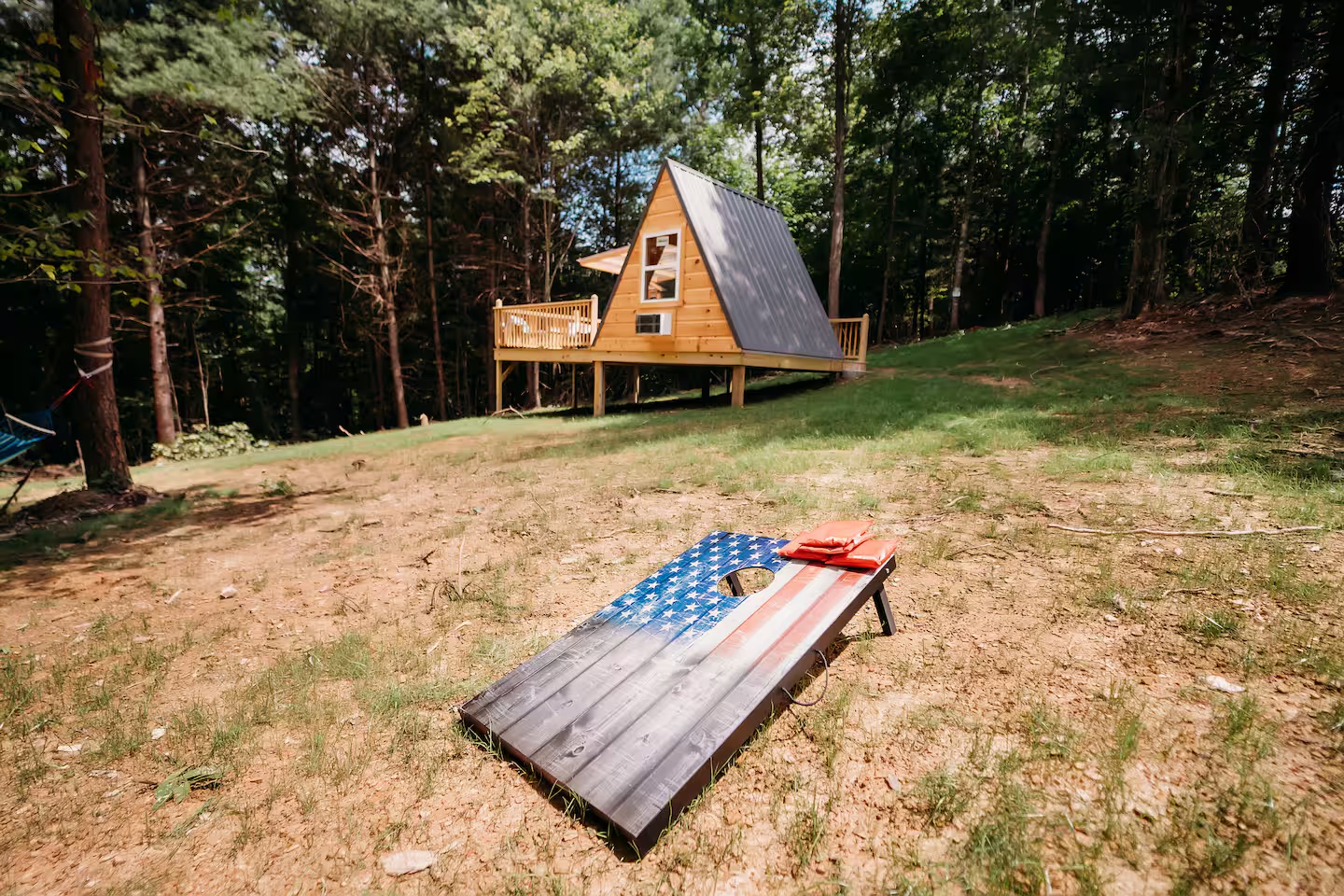
Before I bought a single thing for these two cabins, I asked a research tool to talk me out of half of it.
I want to be upfront about that. I didn't walk into furnishing Shadow Pine and Woodsman as some romantic who refuses to look at a spreadsheet. I run rentals for a living. So I sat down and asked, in plain terms: if I spend money on the nice stuff — the real coffee gear, the record player, the good knives, a desk built for writing letters — does any of it actually pay me back? I wanted a number. And I was genuinely ready to be told no on a few of them.
The research came back, and it was good. Not hand-wavy. It did the thing I'd want a sharp employee to do: it refused to lump everything together and instead sorted every upgrade into three buckets.
The three buckets, and why they're right
Bucket one was the revenue drivers — the visible, experiential stuff that demonstrably changes how guests behave. Bedding and linens. Lighting. A serious coffee setup. Premium bath products. Outdoor seating and a fire pit. Strong photography. The data here isn't subtle: professional interior design tends to lift nightly rates somewhere in the 10 to 25 percent range, push occupancy up 8 to 12 percent, and pay itself back in roughly six to sixteen months. Around 40 percent of guests say outright they'd pay more for luxury amenities. So when the research said "spend here, no hesitation," I didn't argue. I agree completely. That money is not a question.
Bucket two was the brand amplifiers — curated knives, specialty serveware, designer textiles, art, scent. These only earn their keep if they hold up a distinct, boutique identity. Conditional. Fair.
Bucket three was the one that stung a little. The research called it personal indulgences — the things you love that a guest won't notice and that won't move your pricing one cent. Its own example was a designer knife set: appreciated by a small subset, but unlikely to give you any real pricing power. The exact phrase it used was "decoration rather than investment."
Then it handed me the math to prove it. A clean formula. ROI equals your annual revenue increase, minus the annualized cost, divided by that annualized cost, times a hundred. Run my Coolina knives through it. Run the letter-writing desk, the art set, the vinyl record player through it. They don't pencil. By that equation, every one of them is bucket three.
So here's the honest part. The research is correct. The math is correct.
I did them anyway.
What the formula can't see
Most of us, when we get a clear answer backed by numbers, do the smart thing and follow it. I usually do too. A formula like that is a good tool — and a tool only measures what it was built to measure. Think of it like the fuel gauge in a car. It tells you, accurately, how much gas is in the tank. It tells you nothing about whether the drive was worth taking. Both of those are true at the same time, and only one of them shows up on the dash.
The ROI formula is a fuel gauge. It reads guest behavior in dollars — rate, occupancy, reviews, repeat stays — and it reads it well. What it can't read is the moment somebody sits down at that desk, picks up a pen for the first time in years, and remembers they have a handwriting. There's no column for that. You cannot annualize the cost of a person smoking a glass of whiskey in total quiet, by firelight, and not once reaching for their phone. The formula doesn't have a row for "felt human again." So it does the only honest thing it can — it rounds that to zero and moves on.
I'm probably being a little hyperbolic about a record player. But not by much.
What these cabins are actually arguing
Shadow Pine and Woodsman aren't line items to me. They're an argument for a different way to spend a few days, and the indulgences are how the argument gets made.
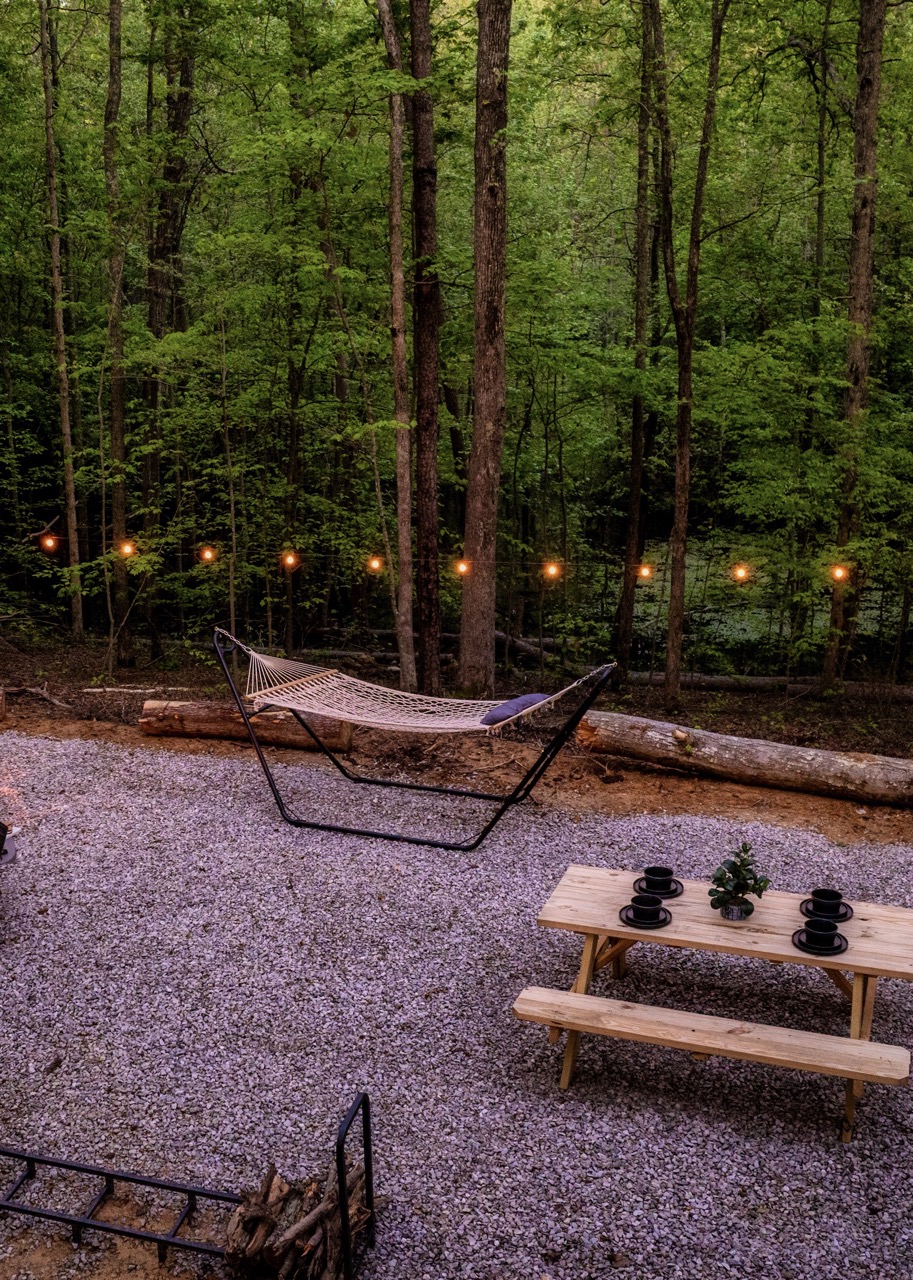
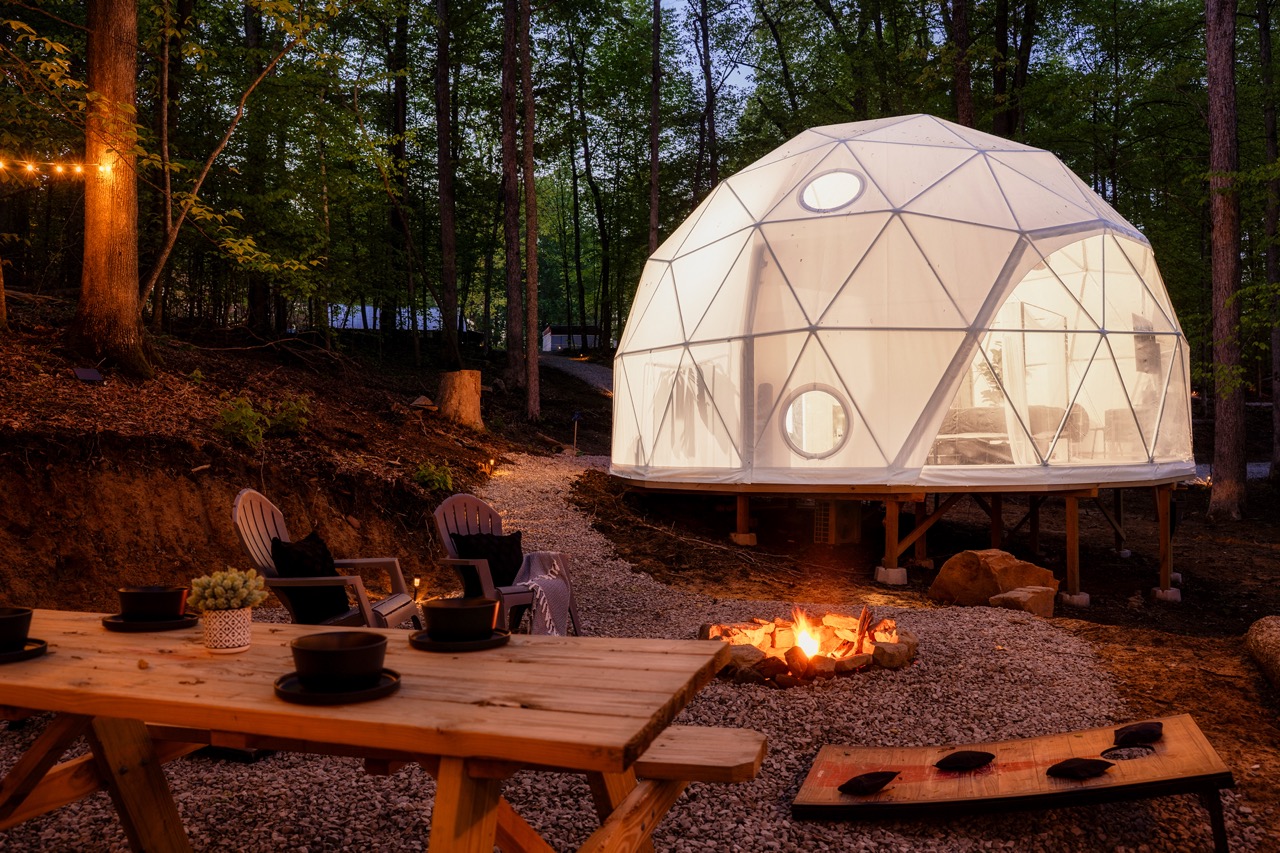
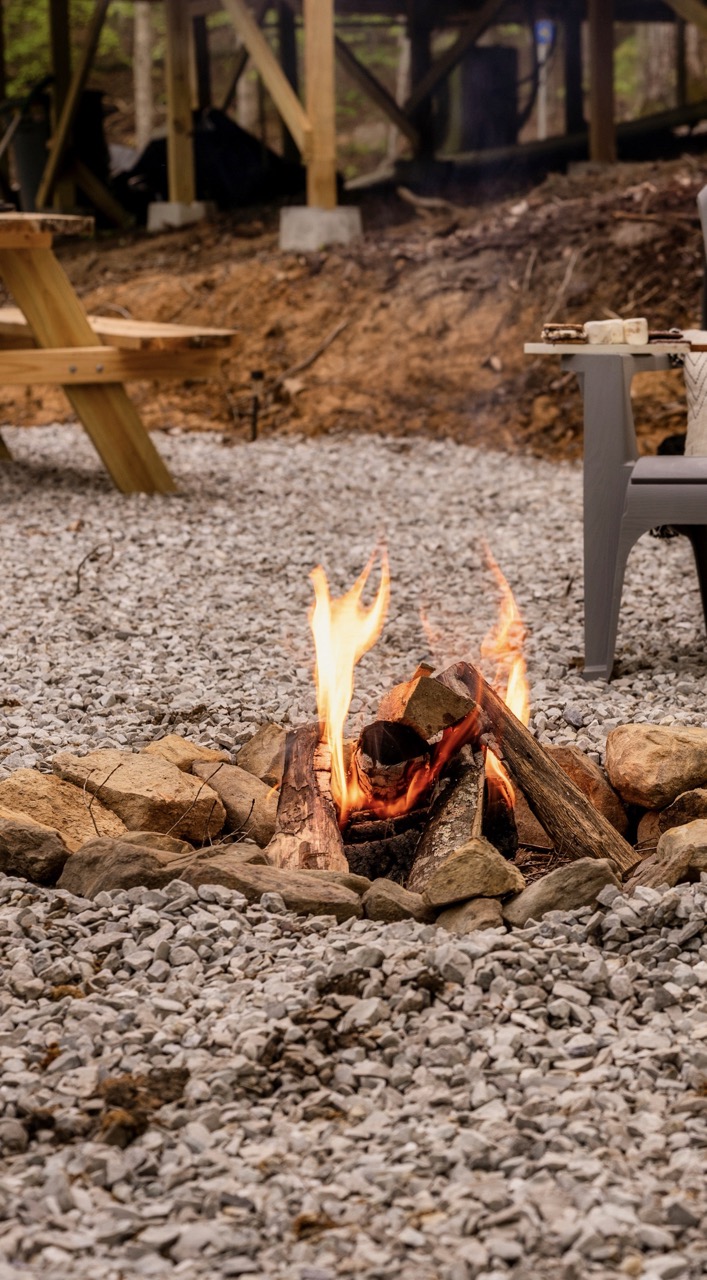
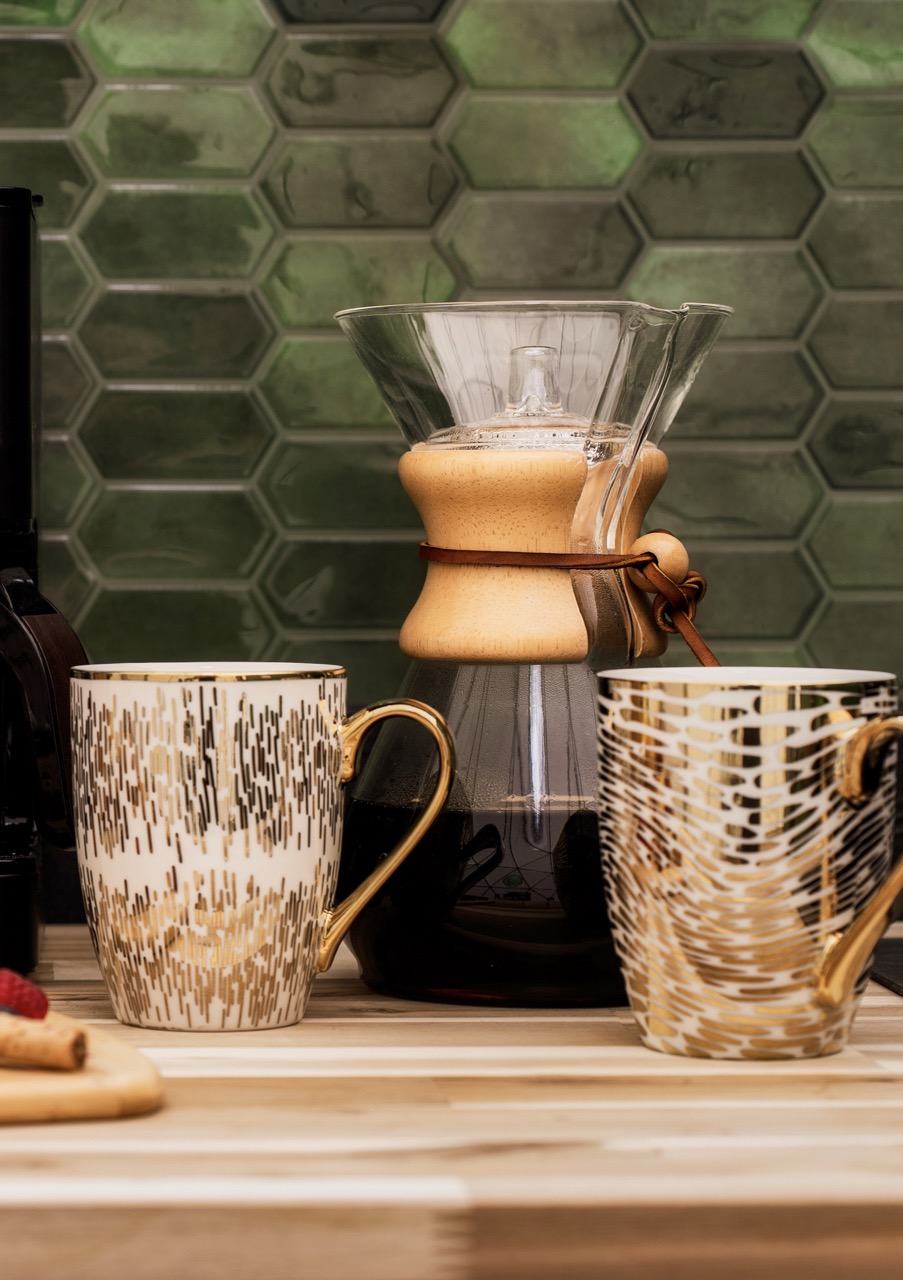
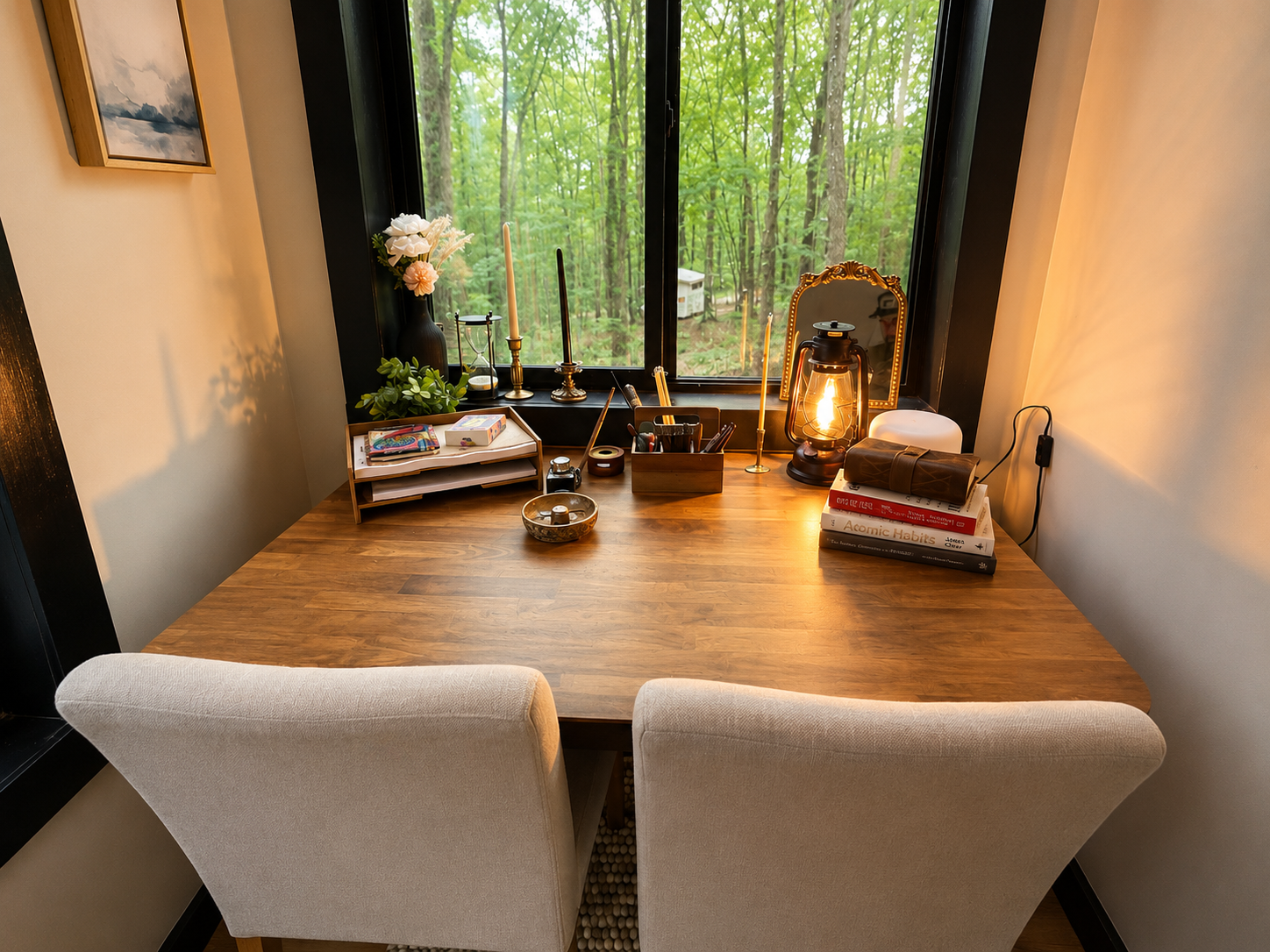
Shadow Pine is a creative retreat — the kind of place where you remember you have a handwriting. The whole thing is built analog on purpose. A desk made for writing letters. An art set, if you'd rather paint. Fellow coffee gear and the slow ritual that comes with it. A vinyl record player. A wood-fired heater you actually have to tend. Out back there's a greenhouse resting area strung with bistro lights that come on right at blue hour, a fountain, a gardening bar, a real fire pit. There's a TV if a rainy afternoon calls for one, but it's beside the point — everything else in the cabin pulls you toward the analog. Every one of those amenities is deliberate. Most of them are bucket three.
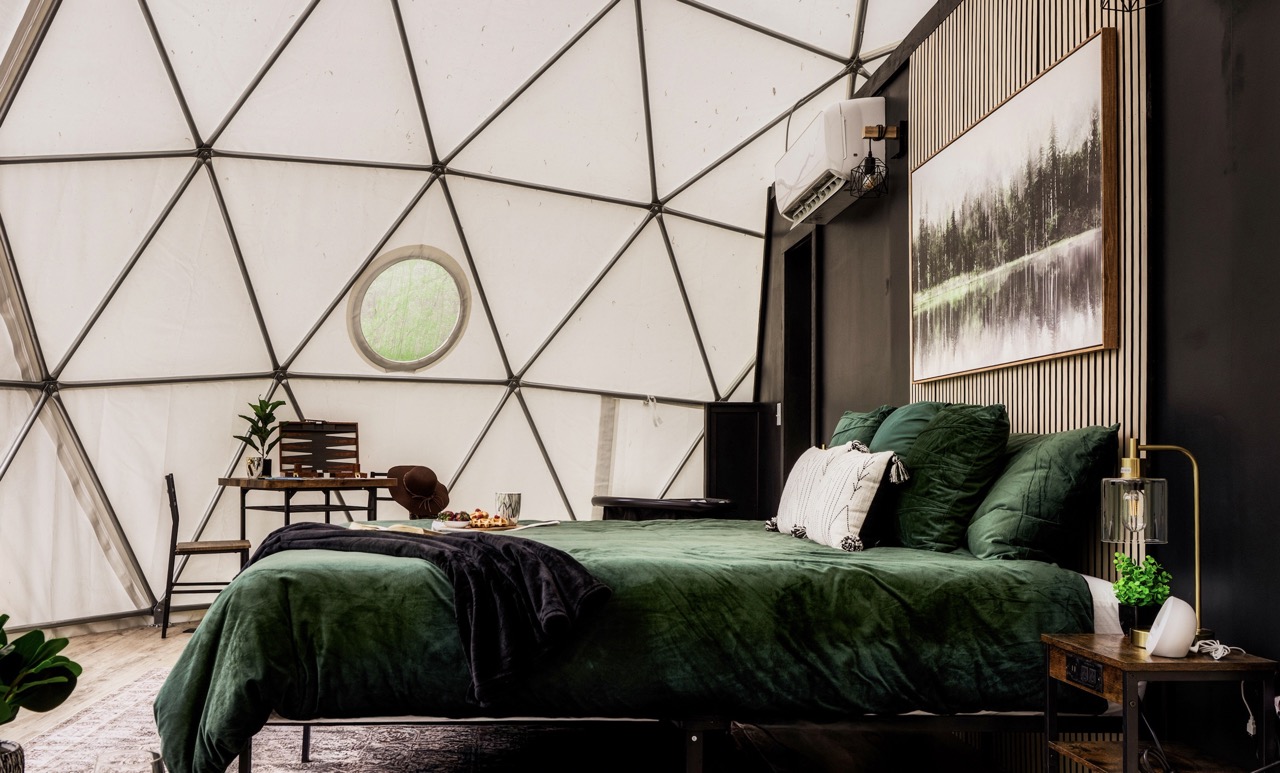
Woodsman is the other half of the same idea, just quieter and a little more masculine. It's where you go to drink something serious, sit in the silence, and not explain yourself to anyone. Two anchors hold the room: a pipe bar, and smoked whiskey under a glass cloche — amber, caught in firelight. The bistro lights here are atmosphere, not a feature you'd photograph for the listing. There's no television in the Woodsman at all, and the missing television is the entire point. Nothing in that cabin asks you to perform. It just asks you to slow down.
That's the brand promise in one sentence: we want someone to stop scrolling and feel the quiet — not the luxury. This is not a Pigeon Forge weekend. No neon, no hot-tub selfie, no generic mountain-view backdrop that every other listing already owns. The point was never to look expensive. The point was to give a person their attention back for a few days.
"Oikos" is Greek for household — for home — and for me running these places is closer to a calling than a line on a P&L. I take the stewardship of someone's rare quiet days seriously. So the knives that don't pencil, the desk that won't move the nightly rate, the record player a formula scores at zero — those aren't where I overspent. They're the product.
Here's where I land, plainly: the stuff that doesn't pay back on the spreadsheet is exactly the stuff a guest remembers, and tells a friend about, and books again to feel one more time. That's a return too. Just not the kind the formula was ever built to catch.
So I'm not telling you the research was wrong. It was right, and I'd hand it to anyone furnishing a rental and tell them to start there. I just decided the things it couldn't measure were worth buying anyway.
If you want to test whether I'm right, come stay. Write me first if you like — tell me whether you're the type who'd sit at the desk at Shadow Pine or pour something slow at Woodsman, and I'll tell you which one fits you. I usually get that one right.
Then leave your phone in the other room.